NewBridge
Touring in virtual reality a factory that only exists on the architects' plans, HTC Vive headset on. A 2016 project for Hennessy, made at Equilibre Games, also meant as a first step towards the connected factory.
Put on a headset, and walk around a factory that is not even under construction yet. That is the idea behind NewBridge, the code name of a project for Hennessy made at Equilibre Games at the end of summer 2016: the architects’ plans were almost done, and we built from them a virtual reality tour of the future site, with an HTC Vive.
The site is Hennessy’s Pont-Neuf bottling and logistics plant near Cognac, inaugurated in October 2017: LVMH published the official video. Its name wasn’t public yet when we worked on it, hence the code name: Pont-Neuf, NewBridge. The local press covered it at the time: “the Hennessy Pont-Neuf factory has a virtual double” (in French), an article that mentions Iteca, who brought us this project.
Two goals
The first: let current and future employees visit the site before it exists, with its buildings, lines and machines.
The second, ahead of its time: make the site a test for the connected factory, what we now call Industry 4.0. Once the factory was finished, the same model would show remotely how the plant and its production lines were running. Back then, nobody was talking about it yet.
From architects’ plans to a Unity scene
The project came to us through Iteca, who had won it with Hennessy and brought in Novo3D and Equilibre Games for the technical side. The building, with its modeling, textures and lighting, was handed to Dominique Loyen of Novo3D, who did an outstanding job given the conditions: working from plans, with very few references on site. What went best was precisely this collaboration. While Novo3D was modeling, we were integrating its work into our Unity scene, Stéphane Landry was modeling the interactive parts (the controllers, the map), we were building the interface, placing the tour stops and drawing the site map, all at the same time.
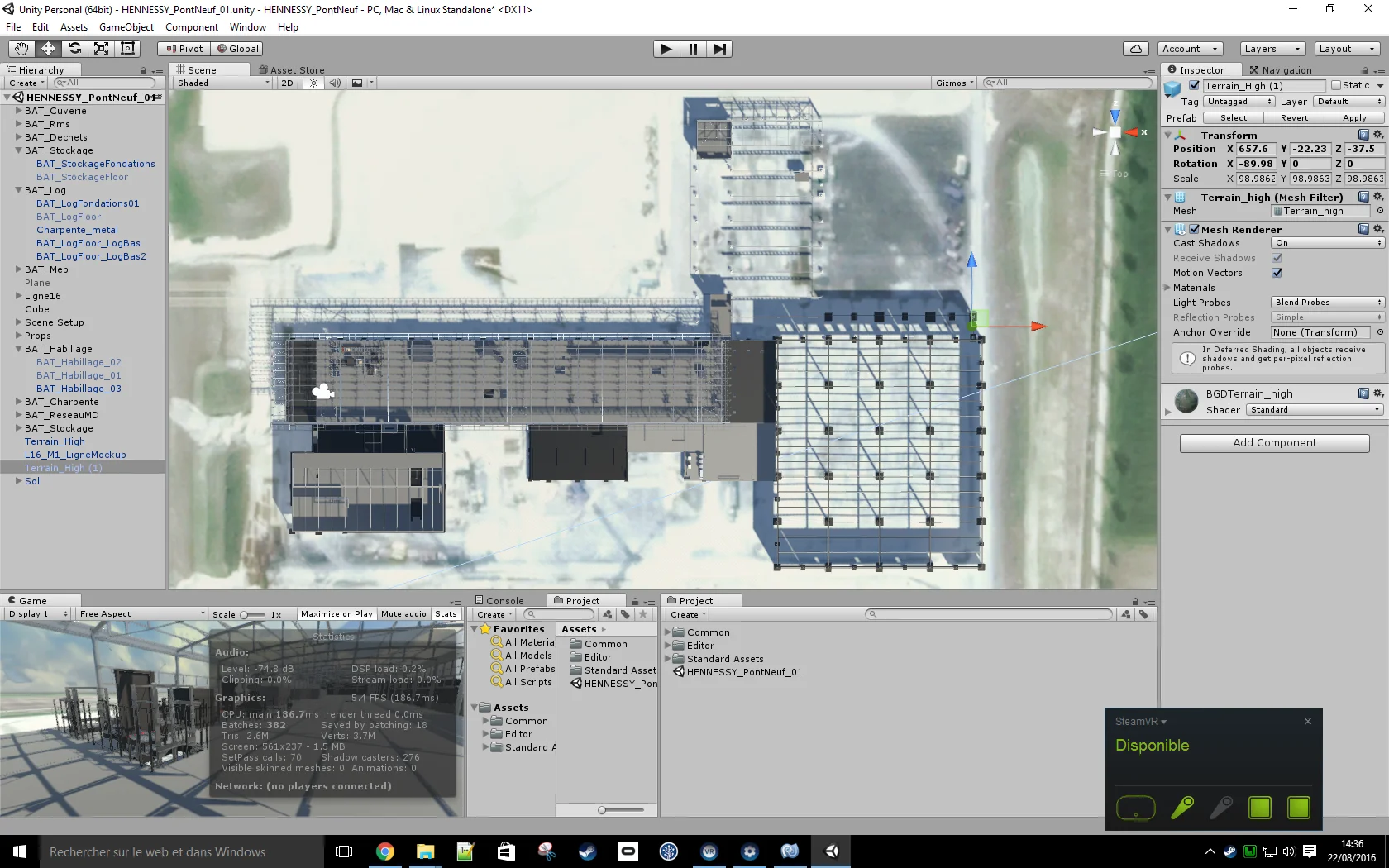
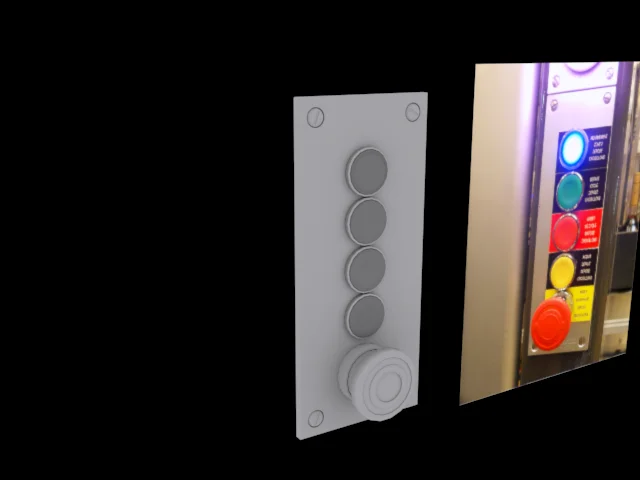
Once again, after L’Hermione in 2015, we were building and touring in 3D a building that didn’t exist yet. But sometimes we were lucky enough to have references: for instance, we could photograph the emergency stop button of one of the lines and reproduce it faithfully in the tour.
VR that anyone can visit
In 2016, virtual reality was still brand new, and few UX designers had looked into it. We had to find what would work for anyone putting the headset on for the first time. We built that design together, mostly through internal user tests, then with the first people outside the studio who tried the product: teams from Hennessy, Iteca and G4F.
To move around, we chose the blink: the screen fades to black, you are teleported, and the view comes back once the move is done. It is the solution that lets everyone visit without feeling unwell. Around each teleport point, you also keep the freedom to walk a few meters, so the immersion doesn’t break. We kept that idea and evolved it later for Sergi TP VR.
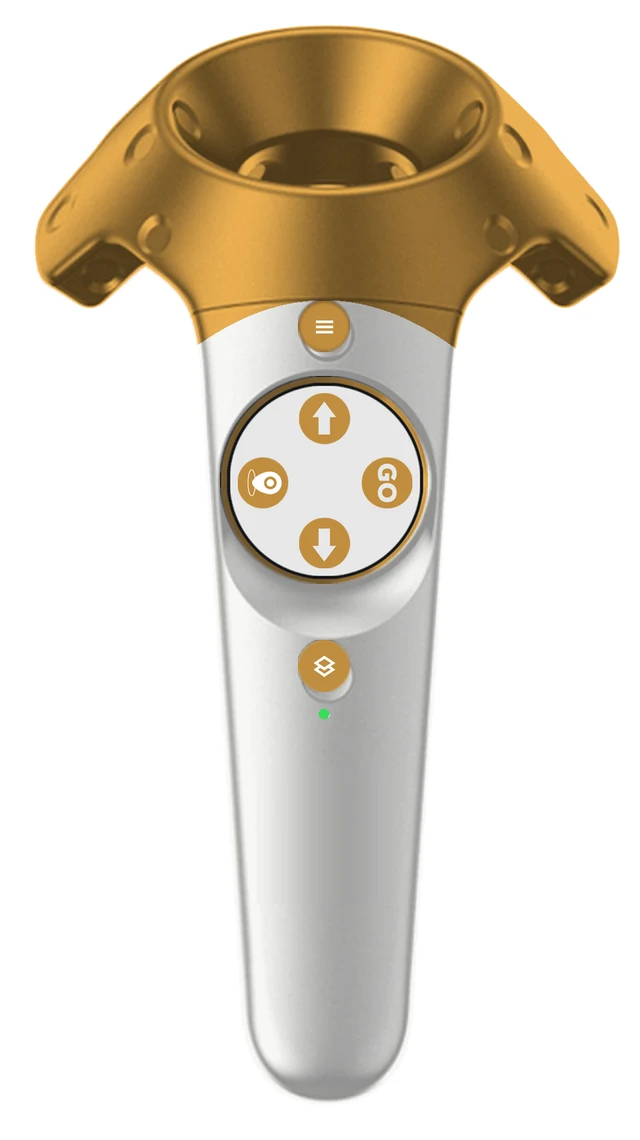
Same logic for the interface: laid on a curved plane, but discreet, with a single button to move and interact. Here again, that is key to making the experience accessible. Even the Vive controllers wear Hennessy’s colors, with the commands drawn right on the trackpad.
 A minimap shows where you are, and each selected machine opens its info sheet.
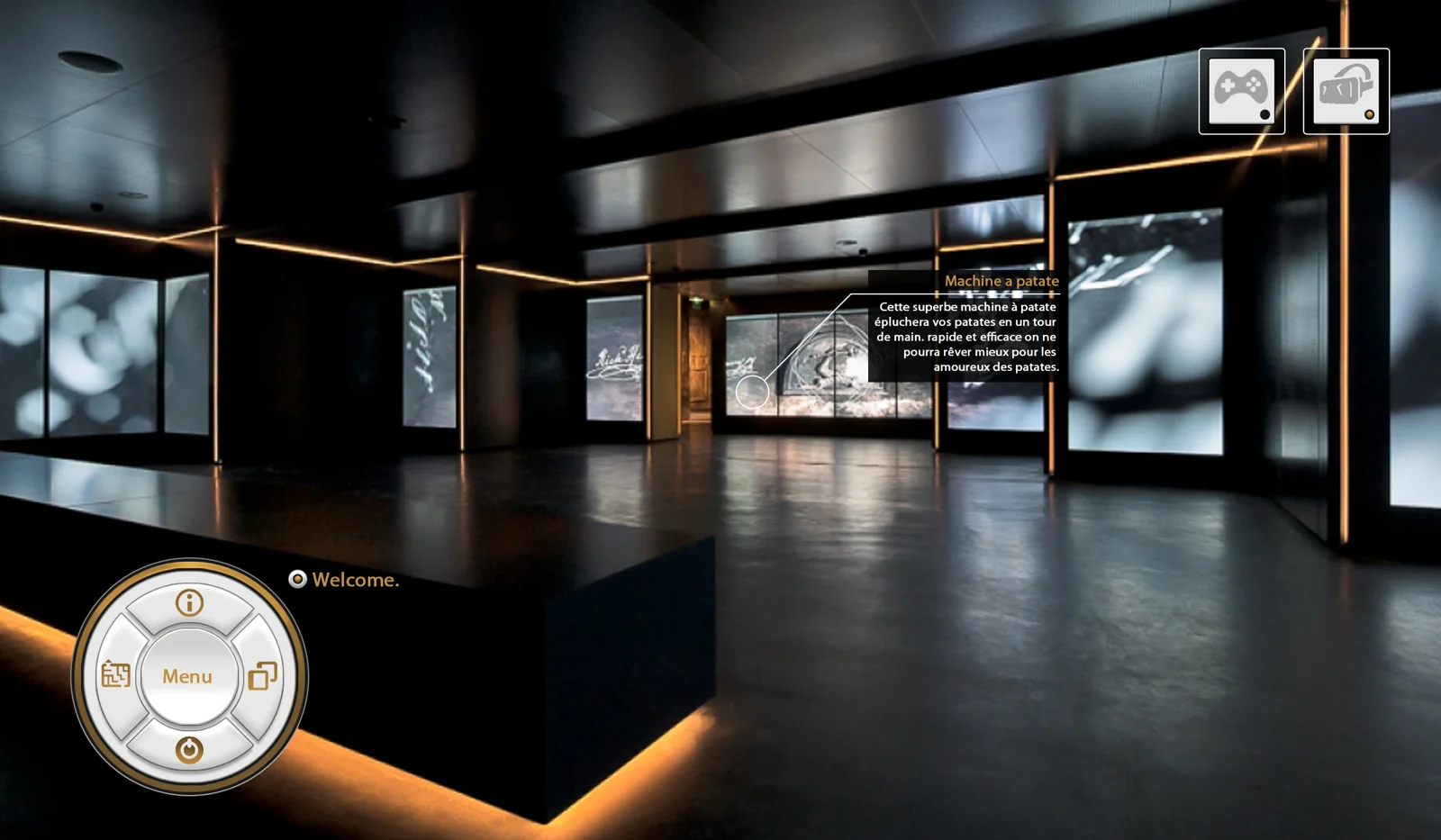
A mouse and touch screen version also exists, but in this first version it stays anecdotal: VR comes first.
What I take away from it
It was our first real VR project for a client, with several collaborations, Novo3D among them. What I take away is that a good project only succeeds if each party brings its own expertise without trying to override the others. That was the case with Novo3D: each to their own craft, and everyone doing their best to fit in the other’s work and skills.
It was also, I think, a favorite project for Jérémy, one of our developers, who already loved VR. He contributed to all our VR projects, for clients and for our own creations alike, before moving on to a studio specialized in virtual reality.
My part
As always, I was running the studio; on this project I also handled the relationship with Iteca and project management on the Equilibre Games side. On the code side, I made the project’s first commit, the guided tour that chains the points of interest, then the sound. A factory is something you hear: the sounds come from Game Audio Factory (now G4F), one of Iteca’s three partners, and to mix the site ambience, the interface clicks and the laser, I wrote a sound handler with looping channels, fades between tracks and a reverb that changes with the room you are in.
But above all, NewBridge was a team effort. My job was to keep everyone in sync, and each person brought their own expertise and personal touch.
Under the hood
- Unity 5.4, SteamVR and the HTC Vive
- Teleportation (Vive-Teleporter), object grabbing (ViveGrip), curved UI (CurvedUI)
- Animations with DOTween, pathfinding with A* Pathfinding Project